
A lot of people ask me why my date ranges for the signs don’t match other astrologers’. One uses one range of birth dates, another uses a different one, and the person getting the reading ends up a little confused about which sign they actually are.
The first thing I want to say is that astrology isn’t only a Thai thing. It’s used all over the world. The best known kinds are Thai astrology and Western astrology (there may be others too). The two systems read and calculate in different ways, so they divide up the dates for each sign differently. This post explains why the dates differ from one astrologer (or one kind of astrology) to another.
Before anything else, thanks to STL on pantip.com, who explained this in great detail. If you’re interested, you can read the original thread (in Thai) here.
All right, let’s get into it.
If you’ve had readings by birth date before, you’ll have seen the dates divided in two ways:
Example: Capricorn
- Type 1: 15 January – 14 February (Thai astrology)
- Type 2: 22 December – 20 January (Western astrology)
Type 1
Type 1, the Thai (sidereal) dates, is based mainly on the sky itself: the constellation of each sign and the Sun. Whenever the Sun moves from one constellation into the next, it counts as changing sign. If you compare the sky with the dates, you’ll find they line up closely.
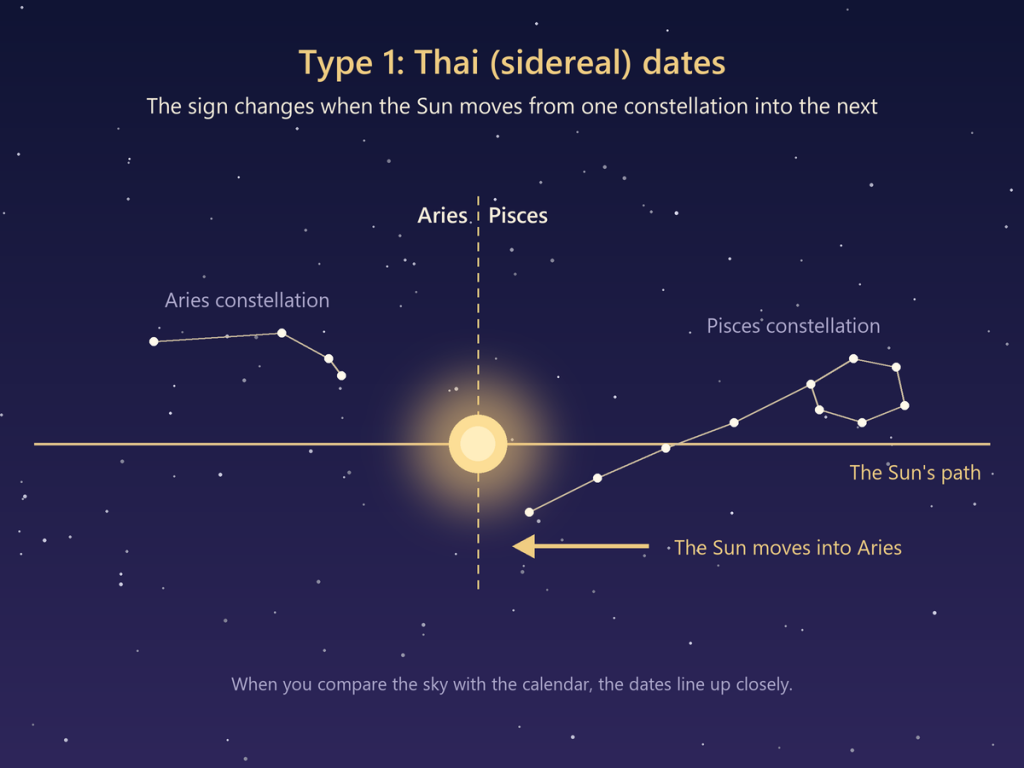
Example: the Sun moving into Aries
Type 2
Type 2, the Western (tropical) dates, doesn’t look at the Sun against the constellations. It uses a reference point against the constellations instead. The idea is similar: when this point moves into a sign, it counts as moving into that sign.
That reference point is the equinox point, where the celestial equator crosses the ecliptic.
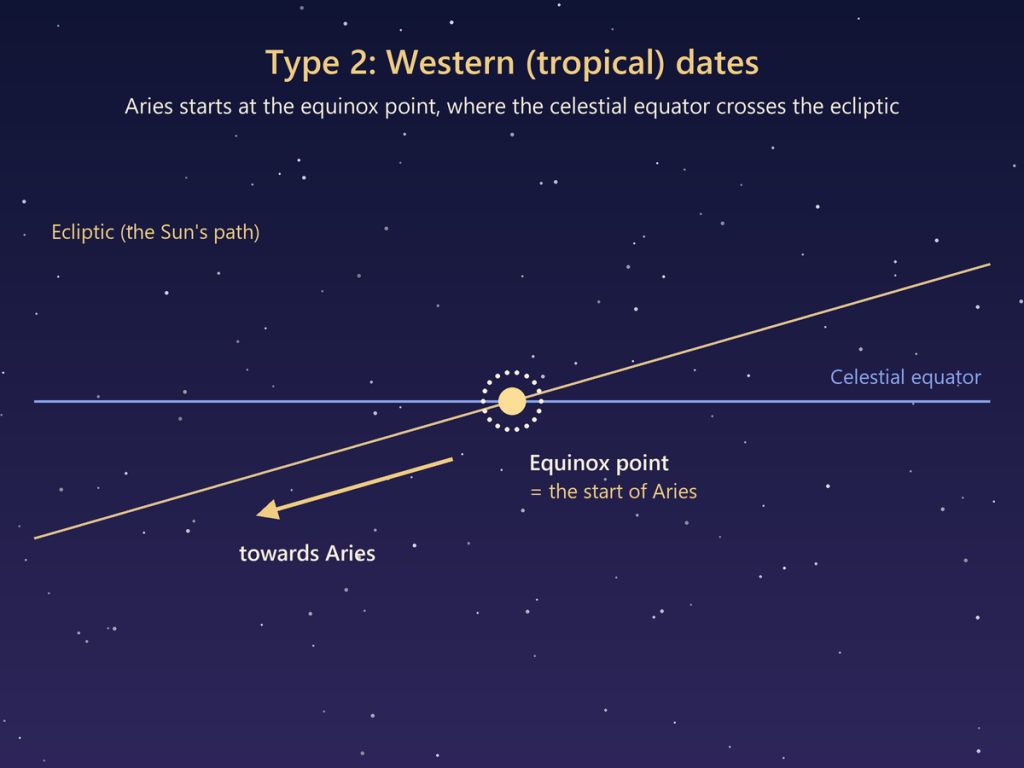
Example: the equinox point, where Aries begins
So because the two systems use different reference points, their dates don’t match.
Personally, I use Western astrology to divide the signs. I read with tarot, and the history and ideas behind the cards draw quite a lot on Western astrology, so I think it fits better in many ways, especially for predicting timing.
I hope this clears things up for anyone who was wondering 🙂